Rusty or Discolored Water From Your Valley Taps: What Aging Pipes Are Trying to Tell You
July 30, 2026
QUICK ANSWER: Discolored water almost always points to corrosion inside your pipes, most often aging galvanized steel that rusts from the inside out. Brown or yellow water that shows up first thing in the morning and clears after about 30 seconds of running is rust flaking off the interior pipe wall. Hard Valley water speeds the process along. When the color keeps returning, spreads to more than one fixture, or comes with dropping pressure, the pipe itself is usually the problem, and repiping is worth a serious look.
You turn on the bathroom tap first thing in the morning and the water runs a faint brown, like weak tea, before it slowly clears. Your coffee tastes a little metallic, and there is a rusty ring settling into the bottom of the tub. In a lot of Reseda, Woodland Hills, and West Hills homes, this is the first real sign that the pipes behind the walls have been quietly aging for decades. It is easy to write off as a fluke, run the tap for a minute, and forget about it. The color usually clears, after all. But discolored water is one of the clearest messages your plumbing sends, and reading it early can save you from a wet ceiling or a flooded slab later on.
We have spent more than 18 years opening walls in Valley homes, and the story behind rusty water is almost always the same. Here is how to make sense of what you are seeing, and how to tell whether you are looking at a small fix or a system that has reached the end of its life.
What the Color of Your Water Is Actually Telling You
Water changes color for specific reasons, and the shade is a decent first clue about what is happening inside your lines.
Brown, yellow, or tea-colored
This is rust. As steel pipe corrodes on the inside, flakes of oxidized metal break loose and travel with the water. It tends to be worst in the morning or after the house has sat empty for a day, because the water has had hours to sit still and pick up rust. If it clears after 30 seconds or so of running, that is a strong sign the corrosion is in your own pipes rather than the street main.
Cloudy or milky white
This is usually harmless. Tiny air bubbles or dissolved minerals from hard water can give the water a cloudy look that settles from the bottom up within a few seconds. It points more to mineral content than to failing pipe.
Blue or blue-green staining
A bluish tint, or green stains around drains and fixtures, can point to copper corrosion, often tied to water chemistry or older fittings. It is less common than rust but worth checking.
A metallic taste or a faint musty smell
Water that tastes like a penny usually carries dissolved metal from corroding pipe. Odors are a separate signal, sometimes coming from the water heater, and worth mentioning when you call.
Why Valley Water Is Hard on Older Pipes
The San Fernando Valley sits on some of the harder water in the region. Local utility figures put the hardness in the Valley and west Los Angeles area at roughly 8 to 16 grains per gallon, well into the range that leaves scale on your fixtures and inside your pipes. That mineral load is the same reason you fight spots on the glasses and crust on the showerhead.
Inside metal pipe, those minerals do two things. They build a rough scale that narrows the opening over the years, and they give corrosion a foothold. Add the long, hot, dry Valley summers, when water sits warm in the lines for hours between uses, and you have close to ideal conditions for old steel to rust from within. None of this happens overnight. It is the slow accumulation of decades that finally shows up as a brown-tinged glass of water.
TIP: Keep an empty white bucket or a clear glass by the bathroom sink for a week. Each morning, run the cold tap into it before anything else and note the color and how long it takes to clear. A pattern of brown water that appears every morning and clears after half a minute tells us far more than a single random sample, and it gives our team a real head start when we inspect.
Galvanized Steel: The Pipe Hiding Behind Mid-Century Valley Walls
If your home went up between the 1920s and the early 1970s, and a lot of the Valley housing stock did, there is a good chance the original water lines were galvanized steel. Galvanized pipe is coated on the inside with a thin layer of zinc meant to hold off rust. That coating buys time, commonly 40 to 80 years, but it does not last forever. Once the zinc wears through, the bare steel underneath starts to corrode fast.
The corrosion you cannot see
The trouble with galvanized pipe is that it rusts from the inside out. The outside can look perfectly fine while the interior wall is thick with rust deposits, a process plumbers call tuberculation. Over time those deposits choke the pipe down until the usable opening is a fraction of what the pipe outer size suggests.
Why pressure fades along with color
As the inside of the pipe narrows and roughens, less water can push through. That is why so many older Valley homes have both discolored water and weak pressure in the shower. They are two symptoms of the same underlying problem. When we see them together, especially in a home with original galvanized lines, the pipe is usually near the end of its service life.
One Faucet or the Whole House? Reading the Pattern
Where and when the color shows up narrows things down quickly.
A single fixture
If only one faucet runs brown and the rest are clear, the problem is often local, a corroded supply line under that sink, a failing shutoff valve, or sediment in an aerator. That is frequently a contained repair.
The water heater
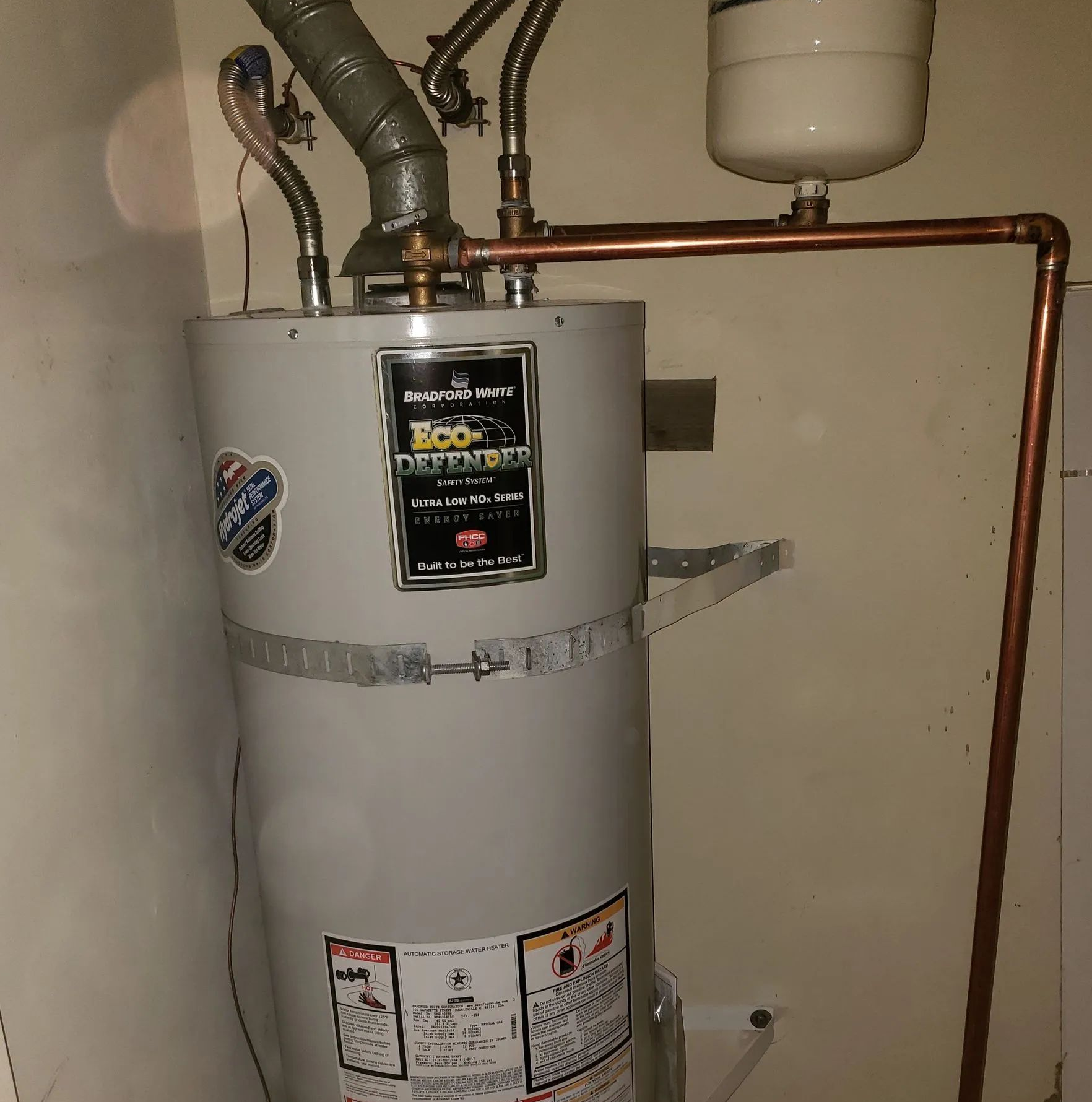
Discolored hot water, with the cold running clear, often points to a rusting tank or sediment settled at the bottom of the heater rather than the pipes themselves.
The whole house
When brown water shows up at several fixtures, hot and cold alike, and keeps coming back day after day, the supply piping itself is the likely source. In a mid-century home with galvanized lines, that pattern is the one that most often leads to a repiping conversation.
WARNING: Do not lean on the habit of running the tap until the water clears and then treating it as solved. Chronic rusty water means metal is actively breaking down inside your walls. The same corrosion that discolors your water thins the pipe until a joint or a run finally gives way, and a slab leak or a burst line inside a wall can cause far more damage than the discoloration ever hinted at. Recurring color is a reason to have the system looked at, not a reason to keep waiting.
Picking a mount that can handle the spot
Repair or Repipe: How We Make the Call
There is no single answer that fits every home, so we start by looking rather than guessing. When our team comes out, we inspect the system to understand what material you have, how far the corrosion has spread, and whether the trouble is isolated or system-wide. A home with one bad supply line and otherwise sound copper is a very different situation from a house still running on its original 60-year-old galvanized network.
When a repair makes sense
Isolated leaks, a single corroded line, or a fixture problem can often be fixed on their own without touching the rest of the house. If the bulk of the plumbing is in good shape, spot repairs are the sensible path.
When repiping is the better move
Once you are patching leaks again and again, or discolored water and low pressure have spread across the whole house, replacing the system usually ends the cycle for good. Chasing one corroded section after another in aging galvanized pipe tends to be a losing game, because the next weak spot is already forming somewhere else.
Picking a mount that can handle the spot
What Repiping a Valley Home Involves
Repiping means replacing the old supply lines that carry water through your home with new, modern material. Our team inspects first, maps out the runs, and gives you a plan before any wall is opened.
The materials we use
We work mainly with copper and PEX. Copper is valued for its durability and a long service life, often 50 years or more. PEX is a flexible modern piping that resists freezing and installs efficiently, with a service life commonly in the 40 to 50 year range. Both are lead free and chosen to match your home layout, your water, and the way you use it, rather than forcing one material on every job.
Living through the work
In most homes you can stay put during a repipe. Water gets shut off for portions of the work, and we schedule the runs to keep the disruption manageable so your household keeps moving. Once the new lines are in and the walls are patched, the rusty mornings end, the pressure comes back, and the guesswork about what is happening behind your walls is over.
Frequently Asked Questions
Why is my water brown only in the morning?
Overnight, water sits still in pipes for hours and picks up rust from corroding interior walls. Running the tap flushes rust-laden water out first, clearing after about 30 seconds, usually meaning the corrosion is inside your home pipes.
Is rusty tap water a plumbing emergency?
Not on the first morning, but rarely nothing. Rusty water stains fixtures and signals pipes breaking down inside. If the color is persistent or spreading, having the system inspected prevents a small problem becoming a wall leak.
Does hard Valley water really wear out pipes faster?
It contributes. Mineral content around 8 to 16 grains per gallon leaves scale inside pipes, giving corrosion a foothold. Combined with long dry summers leaving warm water sitting in lines, hard water accelerates older pipe aging.
How long do galvanized pipes usually last?
Galvanized steel is often quoted at 40 to 80 years, with many homes hitting trouble mid-range. The zinc coating eventually wears through, accelerating corrosion. Many mid-century Valley homes are now past their original lines' intended lifespan.
Can I just replace the one pipe that is discolored?
Sometimes. If discoloration is isolated to a single line with sound surrounding plumbing, targeted repair works. When several fixtures run brown with dropping pressure, replacing one section rarely holds since surrounding pipe corrodes at the same rate.
How do I know if it is my pipes or the city water?
Test timing and spread. Color clearing after thirty seconds, appearing mainly after standing water, points to your home. Neighborhood-wide discoloration or water that stays brown regardless of running time suggests a main or utility issue.
Reading the Signs Before They Become a Leak
Rusty water is rarely an emergency on the first morning it appears, but it is almost never nothing. It is your plumbing telling you that the metal carrying water through your home has started to give way, and in older Valley houses that message deserves attention rather than a shrug. Save The Day Plumbing has spent 18+ years reading exactly this pattern in homes across Reseda, California.
Watching the pattern, noting whether it spreads, and paying attention to pressure alongside color gives you a real picture of what is happening behind the walls, long before a corroded line turns into a wet ceiling. A brown glass of water in the morning is information, not an emergency, but it is information worth acting on before the pipe finally gives way somewhere you can't see.